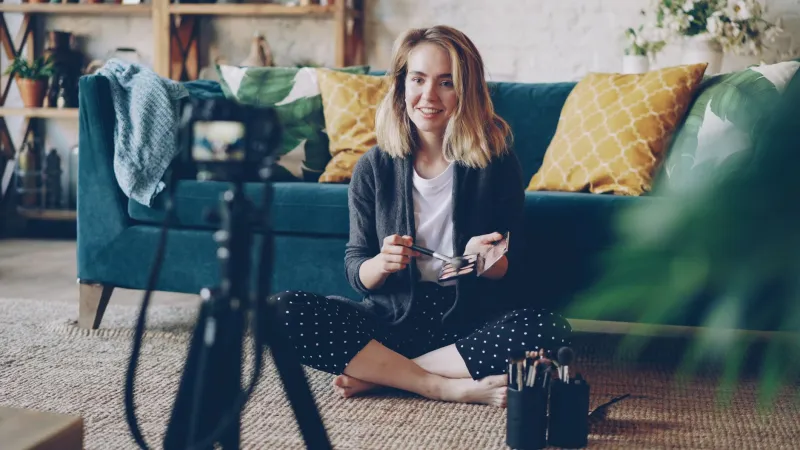
Mood on Demand: How Gen Z Learned to Hack Their Emotions Through Carefully Chosen Content
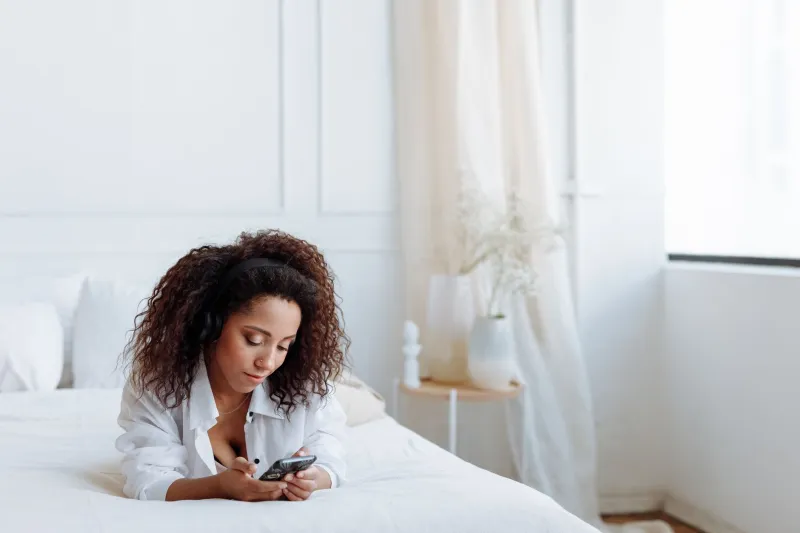
There's a playlist for everything now. Not just for workouts or road trips — but for crying on purpose, for feeling productive without actually doing anything, for simulating the vibe of a rainy Parisian café even when you're sitting in a Tulsa apartment at 2 p.m. on a Tuesday.
Gen Z didn't stumble into this. They engineered it.
Call it the dopamine menu, the vibe prescription, the emotional content stack — whatever name you give it, the behavior is the same: deliberately choosing what to watch, listen to, or scroll through based on the emotional state you want to be in, not just the one you're already feeling. It's less passive consumption and more intentional emotional architecture.
And it's more sophisticated than it sounds.
The Playlist as Emotional Tool
Ask any 22-year-old about their Spotify setup and you'll likely hear about a folder of playlists organized not by genre but by feeling. "Crying it out," "Main character morning," "Dissociating but make it cute." The titles alone tell a story about how this generation relates to their inner world — with humor, self-awareness, and a surprising degree of control.
"I have a playlist I put on specifically when I want to cry," says Mia, a 24-year-old content creator based in Atlanta. "Like, sometimes I need a release but I'm not there yet. So I put on the playlist and I let the music take me there. It works every time."
This isn't accidental emotional exposure. It's deliberate induction. Mia knows what she wants to feel, and she knows which content gets her there fastest.
Dr. Leila Hakim, a clinical psychologist who works with young adults, says this behavior is a form of emotional self-regulation — and it's not inherently unhealthy. "Humans have always used art and media to process emotions," she explains. "What's different now is the precision and accessibility. You can find content that matches an incredibly specific emotional frequency, almost instantly. That's a new kind of power."
Comfort Shows and the Science of the Rewatch
Beyond music, there's the comfort show phenomenon — and it's massive. The same episodes of The Office, Gilmore Girls, or Avatar: The Last Airbender cycled on loop, not because the viewer forgot the ending, but because the familiarity itself is the point.
Neuroscientifically, this makes sense. Predictable narratives reduce cognitive load. When your brain doesn't have to work hard to follow a plot, it frees up emotional bandwidth. You can feel the show without having to process it. The result is something close to a meditative state — soothing, low-stakes, reliable.
"I watch Schitt's Creek when I'm anxious," says Jordan, a college student in Chicago. "I've seen every episode probably four times. But something about knowing exactly what's going to happen makes me feel safe. It's like a hug I can turn on."
Dr. Hakim notes that this isn't avoidance behavior, necessarily. "Choosing a comfort show to decompress after a stressful day is no different from someone choosing a warm bath. The medium is digital, but the function is self-care."
The line gets blurrier, she says, when the content use becomes a substitute for processing rather than a bridge to it. "If someone only ever uses media to avoid feeling something difficult, that's worth examining. But used intentionally? It can be a genuine wellness tool."
Aesthetic as Emotional Shorthand
Then there's the aesthetic dimension — possibly the most Gen Z thing about all of this. Scrolling through a "dark academia" Pinterest board isn't just visual entertainment. For many young people, it's a way of inhabiting a desired emotional frequency. Moody lighting, leather-bound books, autumn rain — these images aren't aspirational in the traditional sense. They're emotional calibration tools.
TikTok has turbocharged this. Entire corners of the app are dedicated to "vibe content" — slow-motion footage of coffee being poured, lo-fi study streams, ASMR rain sounds layered over forest walks. These videos function less as entertainment and more as ambient emotional infrastructure.
"I'll put on a lo-fi study stream even when I'm not studying," admits Priya, a 21-year-old in New York. "It puts me in a headspace where I feel calm and focused. The content itself doesn't matter. It's the feeling it creates."
What It Reveals About Digital Wellness
The bigger picture here is fascinating. In an era of infinite content and constant algorithmic bombardment, Gen Z has found a way to flip the script — moving from passive recipients of whatever the algorithm serves to active architects of their own emotional environment.
That's a meaningful shift. And it suggests something important: this generation isn't just media-literate. They're emotionally literate in ways that previous generations weren't trained to be, partly because of how overwhelming the digital landscape became.
The attention economy tried to hack their feelings. They hacked back.
Of course, it's not all perfectly balanced. The same tools that help someone cry it out or decompress can also enable avoidance, over-stimulation, or emotional numbing. The line between self-regulation and self-sedation is thinner than a TikTok scroll.
But the instinct itself — to treat your media diet as something worth being intentional about — feels genuinely new. And genuinely healthy, at least as a starting point.
Maybe the most radical thing Gen Z has done isn't creating a new content format or a new platform. It's deciding that how content makes them feel is worth paying attention to. In an industry built on keeping you consuming without thinking, that's a quiet kind of revolution.