Half the Story, All the Feels: Why Gen Z Stans Franchises They've Never Actually Finished
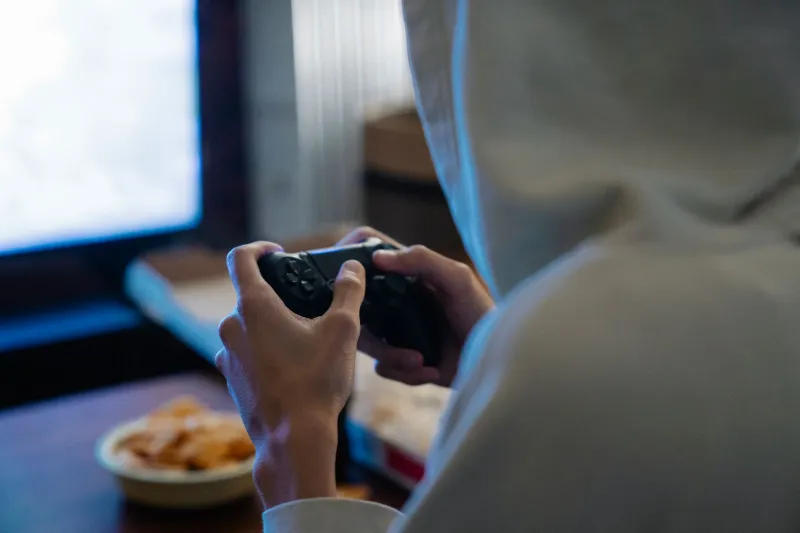
Let's be honest for a second. You know at least one person — maybe it's you — who has strong, borderline religious opinions about a fictional character from a show they stopped watching two seasons in. Or who has a bookshelf copy of a beloved fantasy series with a bookmark frozen somewhere around chapter eight. Or who has logged forty hours in an open-world game without once touching the main storyline.
This is not a failure of attention spans. This is not laziness wearing a fandom hoodie. This is something genuinely new happening in the way younger audiences relate to entertainment — and it's worth paying attention to.
The Vibe Is the Point Now
Here's the thing about media consumption in 2024: the aesthetic of a franchise has become just as powerful — sometimes more powerful — than the actual story it's telling. Think about how many people have a deeply felt connection to the world of Elden Ring without ever defeating the final boss. Or how many casual House of the Dragon fans could write you a dissertation on character dynamics based entirely on gifsets, fan edits, and Twitter threads rather than the episodes themselves.
The content ecosystem surrounding a piece of media has grown so rich and so immediately accessible that you can absorb the emotional DNA of a franchise without ever sitting down with the source material. TikTok explainers, Reddit lore dumps, YouTube video essays, fan fiction — these aren't supplements to the original work anymore. For a huge chunk of Gen Z, they are the original work.
And honestly? The vibes hit just as hard.
Parasocial Bonds Don't Require a Finale
One of the most underappreciated forces driving this trend is the parasocial relationship — that one-sided emotional connection fans form with fictional characters (and, increasingly, with the content creators who talk about those characters). These bonds don't need a completed narrative arc to feel real and meaningful.
You can be devastated by a character's trauma without having watched the episode where it happens. You can ship two people with your whole chest based on three gifsets and a fan-written headcanon. The emotional investment is genuine even when the viewing history is... selective.
Psychologists who study media engagement have noted that parasocial connections activate many of the same emotional responses as real relationships. Your brain doesn't particularly care whether you watched all eight seasons or just followed the discourse. The attachment is the attachment.
Community as the Real Product
There's another angle here that the entertainment industry keeps underestimating: for Gen Z, belonging to a fandom is often more compelling than consuming the media itself.
Being a Stranger Things person, a Wheel of Time person, a Baldur's Gate 3 person — these are identity markers. They signal something about your personality, your taste, your tribe. And you don't need to have finished — or even significantly started — the source material to claim that identity. You just need to be fluent in the conversation happening around it.
This is actually a pretty rational adaptation to the current media landscape. There is genuinely too much content. The streaming wars alone have produced more prestige television than any human could watch in a lifetime. Books, games, podcasts, webtoons — the backlog is infinite and growing. In that environment, choosing which fandoms to belong to becomes its own skill, separate from the act of consumption.
The community is the product. The discourse is the entertainment. The source material is almost secondary.
Studios Are Noticing (And Designing Around It)
Here's where it gets interesting from a business angle. Entertainment companies are quietly restructuring how they think about engagement metrics because of exactly this shift.
Traditional completion rates — did viewers finish the season, did players beat the game — are being supplemented with what you might call cultural footprint data. How much fan content is being generated? How many people are searching for character names? Is the show trending on social even among people who aren't watching it?
Franchises like My Hero Academia, Critical Role, and even something as mainstream as the MCU have massive audiences who engage primarily through secondary content — fan art, analysis videos, meme accounts — rather than through direct consumption of the source. Studios are increasingly designing with this audience in mind, dropping lore tidbits, character moments, and Easter eggs that are specifically engineered to feed the discourse machine rather than serve the narrative.
In other words: they're making content for people who aren't watching the content. And it's working.
Is Anything Actually Lost Here?
It'd be easy to get nostalgic and mourn the death of the Complete Experience — the idea that you should finish the book, see the movie through to the credits, actually beat the final boss. And sure, there's something to that. Narrative completion is a real thing. Endings matter. The payoff of a well-constructed story is genuinely different from the experience of absorbing its vibes secondhand.
But let's not romanticize the old model too hard either. People have always come to beloved franchises sideways — reading the Wikipedia plot summary before the book, watching the movie without reading the novel, getting into Star Wars through the expanded universe before ever sitting down with the original trilogy. Incomplete engagement with media is not new. What's new is how socially normalized and infrastructurally supported it's become.
The tools for partial engagement have never been better. And a generation that grew up with those tools is simply using them.
What This Actually Means
The cult of the unfinished isn't about Gen Z being checked out. If anything, it's evidence of the opposite — of an audience so hungry for connection, meaning, and identity that they're finding ways to access those things even when linear consumption isn't possible or appealing.
They're building emotional lives around fictional worlds with whatever time and bandwidth they have. They're finding community in the spaces between episodes. They're forming genuine attachments to characters they've met mostly through other people's love for them.
That's not a failure of engagement. That's a whole new kind of it.
The entertainment industry's job — if it's smart — is to stop measuring success purely by whether audiences cross the finish line, and start understanding what it means that they never wanted to leave the starting line in the first place.