Small Is the New Massive: The Hyper-Niche Communities Taking Over the Internet One Obsession at a Time
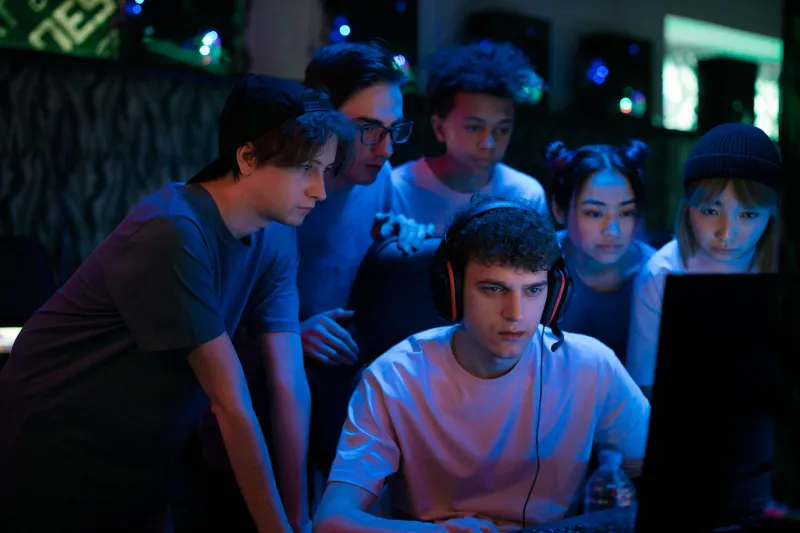
Somewhere on the internet right now, there is a Discord server with 4,000 members who are deeply, almost spiritually invested in a Czech animated series from the 1970s. They share frame-by-frame analyses, original fan fiction, and heated debates about color palette symbolism. They have inside jokes that would confuse literally everyone outside their server. And one of them just got a fan art piece featured in an actual gallery in Brooklyn.
This is not an anomaly. This is the new normal.
While the culture industry has spent the last decade chasing scale — bigger IP, broader appeal, more accessible narratives — something quietly extraordinary has been happening at the edges. Hyper-specific communities, built around interests so particular they'd barely register as a blip on a Nielsen report, are becoming some of the most culturally alive spaces on the internet. And increasingly, the stuff they care about is breaking out.
When 'Too Niche' Becomes the Point
The conventional wisdom used to be that niche was a limitation. You had a ceiling. You couldn't monetize a community of 800 people who loved obscure city-pop B-sides or mid-century agricultural illustration. The money was in the mainstream.
That logic is falling apart in real time.
Because what a hyper-niche community lacks in size, it makes up for in intensity. These aren't passive audiences. They're active participants — creating, debating, evangelizing. The engagement metrics that brands and platforms drool over? Niche communities blow mainstream fandoms out of the water on a per-member basis.
"When you find your people around something really specific, the bond is different," says Marcus, a 28-year-old who moderates a subreddit dedicated to regional Midwest emo bands from the early 2000s. "It's not just 'we like the same thing.' It's 'we are the only people on earth who care about this thing, and that makes us family.'"
That sense of shared obscurity is itself a form of social currency. Knowing the thing, loving the thing before it blows up — that's the new cultural flex.
The Economics of Going Small
Here's the counterintuitive part: the economics of niche communities have actually gotten better as the internet has matured, not worse.
Platforms like Patreon, Substack, and even TikTok's creator fund have made it possible to sustain a creative practice with a small but devoted audience. A zine creator covering regional Japanese street fashion scenes doesn't need a million followers — they need 2,000 people who will pay $8 a month. That math works now in ways it simply didn't in the mass-media era.
Samantha, a 31-year-old illustrator in Portland, built a following of around 15,000 on Instagram around her ultra-specific niche: vintage Soviet sci-fi poster recreations with contemporary pop culture subjects. "I thought nobody would get it," she says. "Then I posted one and the comments were like — 'I have been waiting my entire life for this.' That's the niche community experience. You're not trying to appeal to everyone. You're finding the people for whom your specific thing is exactly what they needed."
She now runs a Patreon that covers her rent. Not bad for a niche that technically doesn't exist.
How Niche Goes Viral (And What Happens Next)
The interesting tension in all of this is what happens when a niche community gets discovered by the mainstream internet.
Sometimes it's beautiful — the community gets resources, recognition, new members who genuinely care. Sometimes it's a disaster. The thing that made the community special was its specificity, its inside-joke density, its assumption that everyone in the room already knows the lore. Flood it with outsiders and the whole ecosystem can collapse.
"There's a concept we call 'the moment before the moment,'" says digital culture researcher Jade Okonkwo, who studies online communities at a university in Austin. "The period when a niche thing is big enough to be sustainable but small enough that it still feels like yours. That window is getting shorter and shorter as the algorithm gets better at surfacing niche content to broader audiences."
The meme world lives this cycle constantly. A format emerges from a specific corner of the internet — say, a very particular style of absurdist humor from a gaming subreddit — and within weeks it's been flattened, replicated, and run through the content mill until it's unrecognizable. The original community moves on, already three steps ahead.
Redefining What 'Trending' Even Means
All of this is forcing a reckoning with how we measure cultural relevance. The old metric — how many people have heard of this thing — is increasingly useless in a fractured media landscape where nobody watches the same shows, listens to the same radio stations, or reads the same publications anymore.
A better question might be: how deeply does this thing matter to the people who care about it?
By that measure, a 6,000-person community obsessed with a hyper-specific subgenre of indie animation might be more culturally significant than a Netflix show with 20 million passive viewers who forgot it existed a week after watching.
The mainstream isn't dead. But it's no longer the only arena that counts. And in 2024, the most interesting cultural conversations aren't happening in the center. They're happening in the corners — loud, specific, and completely unbothered by whether anyone else gets it.