Your Brain on TikTok: The Hidden Science Behind Why You Can't Stop Scrolling
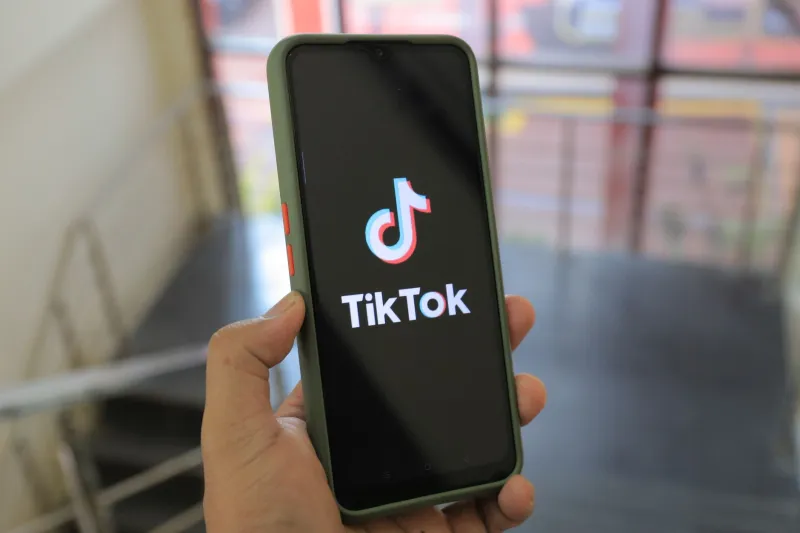
You open TikTok to kill five minutes. Forty-five minutes later, you're watching a stranger reorganize their pantry in hypnotic slow motion and somehow you're invested. Sound familiar? You're not weak-willed. You're just human — and a handful of very savvy creators have figured out exactly how to work that to their advantage.
Welcome to the era of the dopamine menu, where content isn't just entertainment anymore. It's architecture. It's chemistry. And whether you realize it or not, your brain is the product being optimized.
What Even Is Dopamine, Really?
Let's back up for a second, because dopamine gets misrepresented constantly in pop culture. It's not the "pleasure chemical" exactly — it's more like the anticipation chemical. Dr. Anna Lembke, a Stanford psychiatrist and author of Dopamine Nation, has described it as the molecule of craving, not satisfaction. Your brain releases dopamine when it expects a reward, not necessarily when it receives one.
This distinction matters enormously when we're talking about TikTok. The app isn't giving you satisfaction — it's giving you the hope of satisfaction, over and over again, at a pace your nervous system genuinely cannot resist.
Each new video is a tiny gamble. Will this one be funny? Surprising? Weirdly soothing? That uncertainty is the whole game. And creators who understand this are playing it at a championship level.
The Three-Second Hook Is Not an Accident
Ask any creator with a following north of 100K and they'll tell you the same thing: the first three seconds are everything. But this isn't just conventional wisdom — it maps directly onto how the brain processes novelty.
Neuroscientists call it the orienting response. When something new and potentially relevant appears in your environment, your brain automatically redirects attention toward it. It's an evolutionary survival mechanism. TikTok's format essentially hijacks this response on a loop.
Creators like Elyse Myers, Hank Green, and countless nameless cooking accounts have mastered the art of the visual or auditory jolt — a jump cut, an unexpected sound, an absurd opening line — that triggers that orienting reflex before your prefrontal cortex even has a chance to decide whether you care.
"The scroll is the reset button," one mid-tier lifestyle creator told us, speaking on background because her brand deals require content approval. "Every time someone swipes, their brain is primed to be surprised. My job is to be the surprise."
Pacing, Transitions, and the Rhythm of Reward
Beyond the hook, the internal structure of a video matters more than most casual viewers would guess. Fast-cut editing, trending audio, and satisfying visual loops aren't just aesthetic choices — they're timed to match the brain's reward cycle.
Research on variable reward schedules (the same psychology behind slot machines, by the way) shows that unpredictable, intermittent rewards create far stronger behavioral patterns than consistent ones. When a creator mixes high-energy moments with slower, more intimate beats, they're essentially programming a variable reward schedule into a 45-second clip.
Transitions are a particularly potent tool. The satisfying whoosh of a well-executed transition triggers a small but measurable release of dopamine because it signals completion — a micro-resolution — while simultaneously setting up the next beat. It's the neurological equivalent of turning a page in a thriller novel.
The Attention Span Debate Is More Complicated Than You Think
Here's where things get a little uncomfortable. There's been a lot of hand-wringing about TikTok destroying attention spans, and while the concern isn't baseless, the reality is more nuanced.
Dr. Gloria Mark, a professor of informatics at UC Irvine and author of Attention Span, has noted that our capacity for sustained focus has indeed been declining over the past two decades — but she's careful to point out that this isn't purely about short-form video. It's about the cumulative effect of constant digital interruption across all platforms.
What TikTok specifically does is train the brain to expect novelty at a very high frequency. Over time, this can make slower-paced activities — reading a book, sitting through a meeting, watching a two-hour film — feel almost physically uncomfortable. Not because we can't focus, but because our brains have been conditioned to anticipate the next hit before the current one has landed.
For younger Americans who've grown up entirely within this media environment, the long-term implications are still being studied. But researchers are paying attention.
Creators Who Know What They're Doing (And the Ones Who Don't)
Here's what's genuinely fascinating: not all creators who trigger these responses are doing it consciously. Some stumbled into the formula by accident — they made content that felt authentic to them, and it happened to align with how the brain wants to be stimulated. Others are running deliberate experiments, A/B testing thumbnails and audio choices the way a pharmaceutical company tests compounds.
The creators who tend to build the most loyal audiences, interestingly, are often the ones who balance the dopamine engineering with something that feels emotionally real. Pure stimulation without connection burns hot and fades fast. But stimulation plus genuine personality? That's the combo that keeps people coming back.
Think about why certain ASMR creators have millions of devoted followers while technically "better" produced channels struggle. The brain wants novelty, yes — but it also wants to feel like it's in the presence of something authentic. That's the variable that algorithms still can't fully replicate.
So What Do You Actually Do With This Information?
Knowing the mechanics doesn't automatically make you immune to them — but it does give you a fighting chance at being intentional about your consumption. A few things worth considering:
Notice the loop. When you catch yourself scrolling without really watching, that's your dopamine system running on autopilot. Just noticing it can help interrupt the cycle.
Reintroduce friction. The reason TikTok is so effective is partly because it removes every possible barrier to the next piece of content. Deliberately adding friction — putting your phone in another room, using a timer, keeping the app off your home screen — can help recalibrate your baseline.
Seek out slow content occasionally. Long-form podcasts, documentary films, even longform journalism (hi, hello) exercise the parts of your attention system that short-form content doesn't touch. Think of it as cross-training for your brain.
Appreciate the craft without surrendering to it. There's something genuinely impressive about what skilled creators do. Understanding the science behind it doesn't have to diminish the enjoyment — it can actually deepen your appreciation for the artistry involved.
The Bigger Picture
The dopamine economy isn't going anywhere. If anything, it's accelerating — YouTube Shorts, Instagram Reels, and whatever platform emerges next are all competing to deliver faster, sharper hits of neurological reward. The creators who thrive will be the ones who master the science and bring something irreplaceable to the table.
For the rest of us? The most radical thing we can do in a world engineered for our attention is to occasionally, deliberately, give it to something that has to earn it the slow way.
Your brain will thank you. Eventually. Once it stops refreshing.