Your Aesthetic Isn't from Here: The Global Subcultures Quietly Rewriting American Style
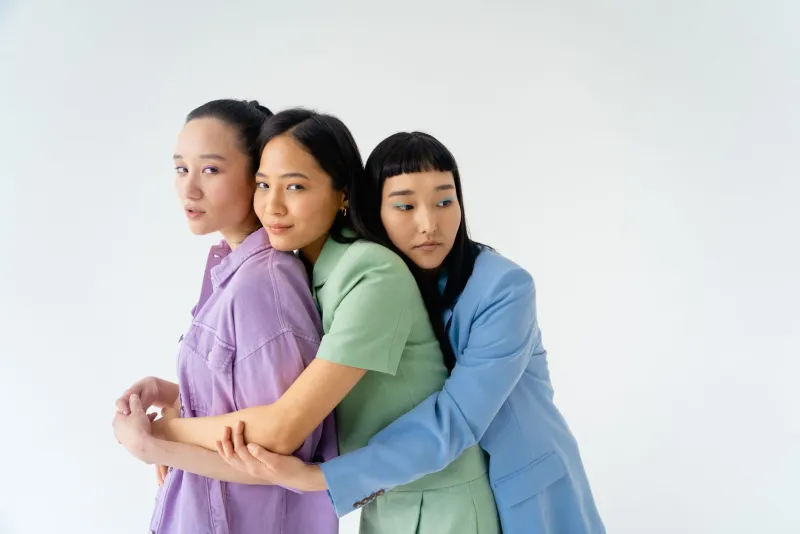
Scroll through any Gen Z influencer's page right now and you'll notice something interesting: the references are everywhere and nowhere at once. A skincare routine lifted from Seoul. An outfit silhouette straight out of Harajuku. Eyeliner technique borrowed from a Filipino beauty creator. And all of it packaged under a single American TikTok handle with a following that would make network TV executives weep.
This is the new American aesthetic — and it's aggressively international.
The Algorithm Doesn't Have a Passport, But It Acts Like It Does
Before we talk about what Gen Z is absorbing, we need to talk about how. Because the mechanism driving this cultural exchange is less about conscious choice and more about digital architecture.
TikTok's For You Page doesn't sort content by geography. It sorts by engagement, interest clusters, and behavioral patterns. The result? A teenager in suburban Ohio can spend two hours deep in a rabbit hole of Korean skincare tutorials, Japanese streetwear lookbooks, and Thai makeup transformation videos — not because they went looking for it, but because the algorithm decided it matched their vibe.
Instagram Reels and YouTube Shorts operate similarly. The walls between "American content" and "international content" have essentially dissolved. What remains is just content — and the most visually compelling, most emotionally resonant stuff floats to the top regardless of where it originated.
This is digital globalization in real time, and Gen Z didn't just witness it. They grew up inside it.
K-Beauty Didn't Just Sell Products — It Sold a Philosophy
Korean beauty culture's infiltration of the American market is probably the most well-documented example of this phenomenon. But it's worth revisiting because the depth of its impact is still underappreciated.
K-beauty didn't just introduce Americans to sheet masks and snail mucin serums (though, yes, both are now mainstream). It introduced an entirely different philosophy about skin. The Western beauty tradition has long leaned into coverage — foundation, concealer, the whole armor. K-beauty flipped that. The goal became skin so healthy, so hydrated, so luminous that you barely needed to cover it. "Glass skin" wasn't a product. It was an ideology.
That shift in thinking has fundamentally altered how American Gen Z approaches skincare. Multi-step routines are no longer considered excessive. Spending money on serums before you'd spend it on foundation is now completely normalized. Brands like COSRX, Some By Mi, and Laneige didn't just find American audiences — they educated them into entirely new consumer behaviors.
And crucially, this happened largely through influencer culture and organic community building, not traditional advertising. Korean beauty creators shared routines, American creators tried them, their followers adopted them, and suddenly Sephora was stocking an entire K-beauty aisle.
Harajuku Comes to Main Street (Via the Internet)
Japanese street fashion has always been visually arresting — Harajuku's maximalist, rule-breaking aesthetic sits at the opposite end of the spectrum from K-beauty's clean minimalism. But both have found devoted Gen Z audiences in America, which says something important: this generation isn't looking for a single global aesthetic to adopt. They're building menus.
Styles like fairy kei, decora, and cottagecore-adjacent Japanese fashion have developed passionate American followings through platforms like Pinterest and Tumblr before TikTok even existed. But TikTok supercharged the community. Now, American creators who identify with J-fashion aesthetics can find their people instantly, source items from international sellers, and participate in a global conversation about style that would have been logistically impossible a decade ago.
Brands like Angelic Pretty and Baby, The Stars Shine Bright — Japanese lolita fashion labels that once felt impossibly niche to American consumers — now have dedicated US fan communities that drive real sales and host local meetups. The internet didn't just expose Americans to these aesthetics. It gave them the infrastructure to live them.
Southeast Asian Beauty: The Next Wave Already Here
If K-beauty was the first major wave and J-fashion the second, Southeast Asian beauty and style influence is the current surge that mainstream media is only beginning to notice.
Filipino, Thai, Indonesian, and Vietnamese beauty creators have built massive followings on TikTok and YouTube, bringing with them makeup techniques, product recommendations, and aesthetic sensibilities that are finding receptive American audiences. The "douyin makeup" trend — originating from Chinese social media and characterized by flushed, doe-eyed, romantic looks — crossed into American beauty consciousness faster than most trend forecasters predicted.
This influence isn't moving in one direction, either. It's a genuine exchange, with American creators engaging with Southeast Asian trends, remixing them, and sending something new back into the global content stream.
Identity in the Age of Infinite Aesthetic Options
Here's where it gets genuinely interesting — and a little complicated. When aesthetic identity becomes so globally fluid, what does it mean for cultural ownership and authenticity?
The conversation around cultural appreciation versus appropriation is alive and active in Gen Z communities, often playing out in comment sections and Discords with more nuance than mainstream media gives credit for. Many Gen Z consumers are thoughtful about how they engage with global aesthetics — crediting origins, supporting creators from those cultures, and distinguishing between celebrating a style and flattening it.
But the lines remain blurry, and the speed of the algorithm doesn't always allow for the kind of reflection that nuanced cultural exchange requires. A trend can go from niche Korean subculture to American mass market in weeks, sometimes without the original creators getting visibility or credit.
A New Blueprint for What 'American Style' Even Means
Maybe the most radical thing about all of this is what it implies for American cultural identity itself. For decades, the flow of cultural influence ran heavily in one direction — American pop culture exported globally. Now the current moves every which way, and Gen Z is both the beneficiary and the engine of that shift.
The result is a generation whose aesthetic references span continents, whose beauty routines are geographically eclectic, and whose sense of style is genuinely global in a way no previous American generation's has been. That's not a crisis of identity. If anything, it's an expansion of what American style can hold.
The emerald pulse of global culture is beating loud — and Gen Z has its ear pressed directly to the speaker.