Cracking the Code: How Gen Z Built a Secret Emoji Language That Brands Can't Touch
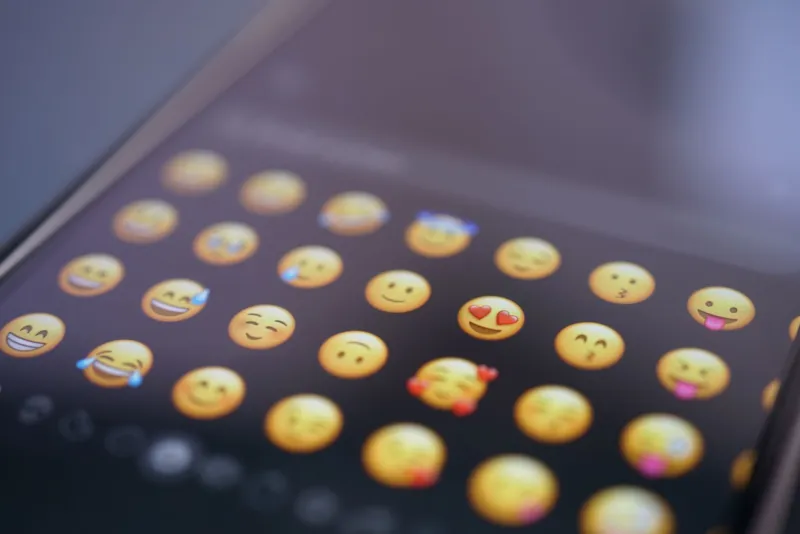
There's a conversation happening right now across millions of group chats, comment sections, and Discord servers — and you probably can't read it. Not because it's in another language, exactly. It's in emoji. Obscure Unicode characters. Deliberate misspellings. A visual pidgin that shifts meaning the moment a marketing team figures it out.
Welcome to the emoji rebellion. And if you're over 30, a brand manager, or an algorithm — you're not invited.
The Problem With Being Watched
Let's back up. For most of the 2010s, the internet felt like a place where self-expression could roam free. Then the monetization machine kicked into overdrive. Every meme became a marketing opportunity. Every slang term got co-opted by a fast food brand's social media account within six months of going viral. Every subculture found itself flattened into a product aesthetic.
Gen Z noticed. And they started doing something about it.
The term algospeak — language deliberately mutated to dodge content moderation and algorithmic detection — has been floating around academic circles for a couple of years. But what's happening now goes further than just avoiding shadowbans. Young people aren't just dodging the algorithm; they're building entire communication systems designed to be unreadable to outsiders. The goal isn't just safety. It's sovereignty.
Emoji Aren't What You Think They Are
Here's where it gets genuinely fascinating. Most people treat emoji as punctuation — a little visual seasoning on a text message. Gen Z communities have turned them into a fully layered system of meaning that changes depending on context, platform, and who's in the room.
Take the classic 🐊 (crocodile). On the surface, it's just a reptile. In certain corners of TikTok and Twitter/X, it signals something very specific about political affiliation — but the meaning has already shifted twice since the symbol first started circulating. That's intentional. The moment a symbol gets decoded publicly, communities abandon it and move on. The language is supposed to be a moving target.
The same goes for Unicode characters that don't render properly on most devices — little squares and question marks that look like glitches but actually carry meaning to anyone who knows what they're looking at. It's the digital equivalent of invisible ink.
"The whole point is that it looks like noise," explains one 22-year-old community moderator who runs an online space for LGBTQ+ fans of niche anime. "If it looks like noise to an algorithm or a brand, we've done our job."
Reclaiming the Feed, One Cryptic Post at a Time
This isn't purely aesthetic. For a lot of Gen Z users — particularly those in marginalized communities — algospeak and emoji encryption started as genuine survival tools. LGBTQ+ creators learned early that certain words would tank their reach or get their content flagged. Activists discovered that direct language about police violence or mental health could get accounts suspended. So they adapted.
"Unalive" instead of suicide. "Seggs" instead of sex. "Le dollar bean" instead of a lesbian flag emoji that kept getting filtered. These workarounds started as necessity and evolved into something with cultural cachet of their own.
What's interesting is how that utility has since bled into mainstream Gen Z communication — even when there's nothing particularly sensitive being discussed. Using coded language has become a vibe. A way of signaling that you're in-group, that you understand the meta-layer of how online spaces actually work, that you're not naive enough to speak plainly into the surveillance microphone of the modern internet.
Opacity, in other words, has become authenticity.
Why Brands Are Spiraling
For marketers, this is basically a nightmare scenario. The entire infrastructure of digital advertising depends on legibility — on being able to read what people are talking about, identify trends in real time, and insert brand messaging at the exact right moment. Emoji encryption throws a wrench into all of that.
Sentiment analysis tools, which brands spend enormous amounts of money on, are largely trained on plain text. They struggle with emoji sequences. They fail almost completely when those sequences are deliberately decontextualized. When a Gen Z community decides that 🫧🧊🌿 means something specific to them and nothing to anyone else, no natural language processing model in existence is going to crack that.
Some brands have tried hiring young consultants to decode current slang in real time. But the communities move faster than any corporate intelligence operation can keep up with. By the time a brand's social media team has figured out what a symbol means, the community has already retired it.
There's something almost poetic about that.
The Bigger Picture: Digital Self-Determination
Zoom out a little and this trend fits into something larger that's been building for years. Gen Z came of age in a world where their data was harvested before they were old enough to consent to it, where their self-expression was routinely commodified, and where platforms that claimed to be neutral were actually deeply invested in shaping behavior for profit.
The emoji rebellion is, at its core, a response to all of that. It's young people asserting that some parts of their communication don't belong to the attention economy. That not everything needs to be legible, shareable, or monetizable.
Is it a perfect solution? No. Determined bad actors can still decode patterns over time. And the very act of writing articles like this one — analyzing the phenomenon publicly — risks accelerating the cycle of co-optation. (Meta-awkward, we know.)
But the impulse behind it matters. In a digital landscape where almost every human behavior has been turned into a data point, the act of deliberately communicating in ways that resist extraction feels quietly radical.
What Comes Next
If history is any guide, some version of this language will eventually get absorbed into the mainstream — stripped of context, sold back to us as a font or a sticker pack or a branded emoji keyboard. That's just how the internet works.
But the communities building these systems know that too. They're not trying to win permanently. They're trying to stay one step ahead, long enough to have conversations that feel like theirs.
And honestly? In 2025, that might be the most punk thing left on the internet.