It's Not TV. It's War. The Weird Power Trip Hidden Inside Your Binge-Watching Habits

Let's be honest about what actually happened last Tuesday night. You finished work late. You ate dinner standing over the sink. You had maybe forty-five minutes of genuine personal time before you needed to sleep to be functional for the next day of doing it all over again. And then — almost defiantly — you stayed up until 2:47 a.m. watching a procedural drama you'd describe as "fine" if anyone asked.
You weren't entertained, exactly. You were reclaiming.
This is revenge watching. It has a name now, a Reddit community, a growing body of psychological literature, and a very specific feeling that anyone with a demanding job, an overscheduled life, or a general sense that their time belongs to everyone except them will recognize immediately. It's not really about the show. It's never really about the show.
The Vocabulary of Domination
Pay attention to the language people use when they talk about their streaming habits. It is quietly, fascinatingly violent.
People don't watch their backlog — they attack it, crush it, demolish it. They power through a series. They conquer a season. They talk about finally defeating a show they've been meaning to watch for two years as if they've slain something. A finished series sits in conversation like a trophy: "Oh, I destroyed all four seasons of that in a weekend."
None of this language is accidental. Language reveals desire, and the desire here is unmistakable: control. Mastery. The feeling of having won something in a life that increasingly feels like it's happening to you rather than by you.
"The framing is really telling," says Dr. Simone Park, a behavioral psychologist who studies leisure and autonomy. "When people describe entertainment consumption as conquest, they're mapping achievement language onto rest. That's a sign that genuine rest — rest without productivity attached to it — feels unavailable or even threatening."
Burnout's Favorite Coping Mechanism
Revenge watching didn't emerge from nowhere. It's a direct product of a specific cultural moment: the collapse of the boundary between work time and personal time, the always-on expectation of the smartphone era, and a workforce that has collectively internalized the idea that being busy is a moral virtue.
The term itself has roots in a Chinese concept — bàofù xìng áoyè — which translates roughly to "revenge bedtime procrastination." The idea is that people who feel they have no control over their daytime hours unconsciously steal back time at night, even at the cost of sleep, because it's the only space that feels genuinely theirs.
American workers adapted this perfectly. The streaming backlog became the battlefield. Finishing a show became proof of something — autonomy, maybe, or just the simple, profound satisfaction of completing a thing in a life full of tasks that never actually end.
"There's a reason people feel accomplished after finishing a season," says Dr. Park. "It has a clear endpoint. Work doesn't. Parenting doesn't. Relationships don't. But a TV show? Episode ten, credits roll, you did it. That completion loop is genuinely satisfying to a brain that's been denied it all day."
The Defiance Is the Point
What makes revenge watching distinct from regular binge-watching — and there is a distinction, even if it's psychologically subtle — is the element of opposition. You're not watching because you're absorbed. You're watching because someone or something does not want you to.
The alarm you set for 7 a.m. is the antagonist. The reasonable voice in your head reminding you about the early meeting is the villain. Staying up to finish one more episode is the act of rebellion. The fact that you'll feel terrible tomorrow is almost the price of admission — proof that this time was yours, that you chose it, that no one can take it back.
This is, when you look at it clearly, a pretty extraordinary psychological response to ordinary modern life. The fact that watching television has become an act of defiance says less about television and more about how thoroughly work-life imbalance has colonized American consciousness.
"When leisure starts to feel like resistance," Dr. Park notes carefully, "that's a signal worth paying attention to. It means the baseline has shifted to something pretty unsustainable."
The Streaming Platforms Know Exactly What They're Doing
None of this is lost on the people building the apps.
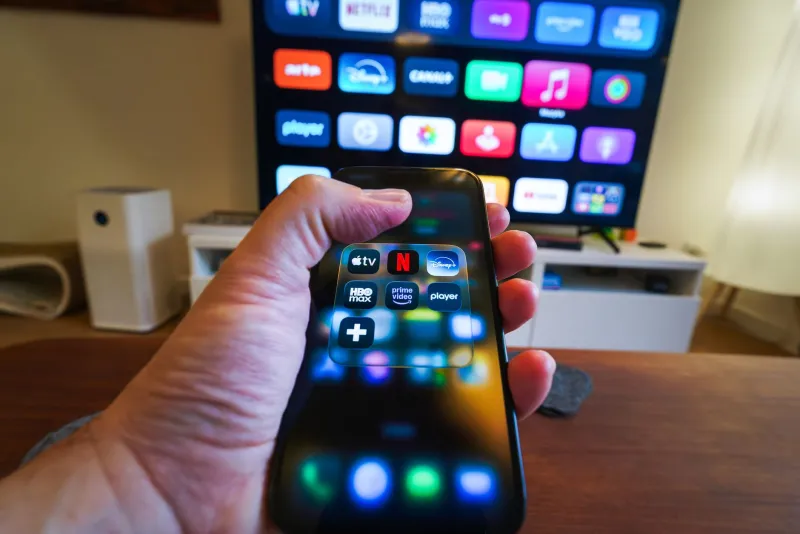
Streaming platforms didn't accidentally create the conditions for revenge watching — they engineered them. Autoplay removes the friction of choosing to continue. Episode cliffhangers are specifically designed to make stopping feel like a loss. The "are you still watching?" prompt, much maligned, actually functions as a permission slip for many people: yes, I'm still here, this time is mine, I'm still watching.
The backlog itself is a product. Netflix, Hulu, Max — they all benefit from the psychological weight of an unwatched queue. The more content you feel behind on, the more you feel compelled to consume. They've essentially gamified guilt.
"It's a very clever loop," says Marcus Webb, a media strategist based in Los Angeles who consults for streaming platforms (and asked that his employer not be named). "You feel behind, so you watch more. Watching more makes you feel productive. Feeling productive makes you feel good. But the backlog never actually shrinks because the platform keeps adding to it. The game is designed so you can never win — but revenge watching lets you feel like you did, just for a night."
What You're Actually Looking For
Here's the thing nobody wants to say out loud: revenge watching works. Not as a sleep strategy, not as a long-term wellness plan, but as a short-term psychological intervention? It genuinely delivers something real.
The autonomy feels real. The defiance feels real. The quiet of 1 a.m. with a show and no obligations — that feels real too, maybe more real than anything else in the day.
The problem isn't the watching. The problem is needing to steal time from sleep to feel like a person with agency over their own life. That's the actual issue, and a streaming platform cannot solve it, no matter how good the autoplay algorithm is.
But until something changes — until work-life balance stops being a punchline, until rest stops requiring justification — the backlog will be there. Waiting to be conquered. One defiant, exhausted, completely understandable episode at a time.