Nerd Is the New Cool: How the Internet Handed Power to the Kids Who Used to Eat Alone
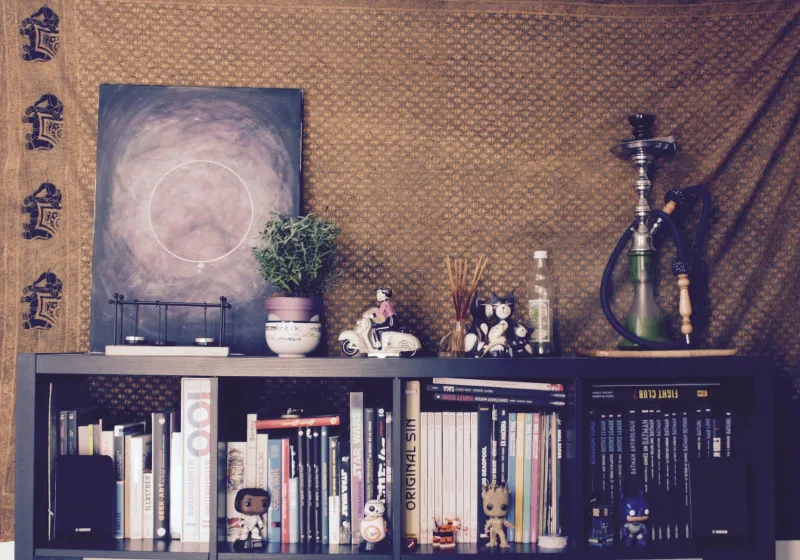
There's a specific kind of middle school memory that a lot of us carry around like a bruise. Maybe it was the anime poster someone spotted in your locker. Maybe it was the fantasy novel you tried to hide under your desk. Maybe it was your very loud, very sincere opinion about a video game franchise that nobody else had heard of. Whatever it was, you learned fast: caring too much about the wrong things was social poison.
Fast-forward to 2025, and that same energy — the obsessive, hyper-specific, deeply unchill enthusiasm for niche stuff — is basically a career path. The internet didn't just level the playing field. It bulldozed the old one entirely and rebuilt it with entirely different rules.
The Architecture of Old Cool
For most of the 20th century, coolness in America operated on scarcity. You were cool because you had access to things other people didn't — the right clothes, the right music, the right social connections. Cool was a closed loop, maintained by gatekeepers who decided what counted and who qualified. The kids at the top of the hierarchy were the ones who seemed effortlessly indifferent, who never tried too hard, who moved through the world like they couldn't care less.
The weird kid — the one who built model trains or memorized every Pokémon evolution or spent weekends at Renaissance fairs — existed outside that system entirely. Not just uncool, but almost invisible. Their interests were treated as evidence of social failure rather than genuine passion.
Then the internet happened, and it didn't just give those kids a platform. It made their intensity the whole point.
When Niche Became a Superpower
Here's the thing about the algorithm age: depth beats breadth every single time. A TikTok account dedicated to competitive cup stacking, deep-sea creature facts, or the history of obscure regional fast food chains doesn't just find an audience — it finds a devoted audience. These aren't casual followers. They're people who have been waiting their entire lives to find someone who cares about the same wildly specific thing they do.
Take competitive knitting. Yes, that's a real thing, and yes, it has a genuinely passionate online community. Creators who document their progress in speed-knitting challenges or rare yarn hauls have built followings in the hundreds of thousands. Brands are reaching out. Sponsorship deals are happening. What was once the punchline of a joke about your grandma is now a legitimate corner of the creator economy.
Or consider the explosion of "oddly specific" fandom content — the people who don't just love anime but have dedicated their entire online presence to a single obscure series from 2003 that never got a Western release. Their encyclopedic knowledge, their fan theories, their passion — it reads as authority. And in the attention economy, authority is currency.
Gen Z Didn't Just Accept This — They Engineered It
What's fascinating is that Gen Z didn't stumble into this shift accidentally. They actively built a cultural value system that rewards authenticity over performance, specificity over broad appeal, and genuine enthusiasm over manufactured coolness. The term "cringe" — which used to be the ultimate social weapon against anyone who cared too visibly — got reclaimed. "Cringe" became a compliment. Being "unhinged" about your interests became aspirational.
You see it in the language. "I'm obsessed" is now a declaration of pride. "This is my Roman Empire" (meaning: the thing you cannot stop thinking about) became a meme format that millions of people used to publicly confess their most embarrassing fixations. The confession booth replaced the cool kid's table.
Gen Alpha, the cohort coming up right behind them, is absorbing all of this in real time. For kids who are 12 right now, there has never been a world where being deeply weird about something wasn't a viable identity. The inversion is complete.
The Authenticity Trap
But here's where it gets complicated, because it always does. Once weirdness becomes valuable, it becomes something people perform. And once it's performed, it stops being weird in any meaningful sense.
There's already a cottage industry of people manufacturing niche identities — curating "obscure" taste, performing awkwardness, cosplaying as the quirky outsider for an audience of millions. The aesthetic of the weird kid gets packaged, sold, and optimized for engagement. Big brands have noticed, obviously. Corporations are falling over themselves to seem niche, specific, and authentically uncool, which is perhaps the most deeply uncool thing imaginable.
The question the internet has always struggled with is whether authenticity can survive being monetized. When a genuine passion project gets a brand deal, something shifts. Not necessarily for the worse — creators deserve to eat — but the texture changes. The thing that made it feel real starts to feel like a product.
The communities that have held onto something genuine are the ones that stayed just a little too specific for mass appeal. The truly weird stuff — the stuff that doesn't translate cleanly into a 60-second video or a marketable aesthetic — tends to stay protected by its own impenetrability.
What This Means for Belonging
Strip away the trend analysis and the creator economy metrics, and what you're really looking at is a fundamental shift in how people find their people. The old model of belonging required conformity — you fit in by sanding down your edges, hiding your weird parts, performing normalcy. The new model runs on specificity. You belong somewhere because of exactly how strange you are, not in spite of it.
For a lot of people, especially those who grew up feeling like there was no table for them in the cafeteria, that's not just a cultural trend. It's genuinely life-changing. The kid who got mocked for their obsessive knowledge of obscure board games can now find 50,000 people online who share that obsession, build real friendships, and yes, potentially build a career.
That's not nothing. That's actually kind of enormous.
The Future of Cool Is Fragmented
If there's one thing the revenge of the weird kid tells us about where culture is headed, it's that the monolith is dead. There is no single cool anymore — no central authority deciding what counts. Instead, there are thousands of micro-hierarchies, each with their own rules, their own tastemakers, their own version of what it means to be someone who matters.
For the kids who spent years eating alone because their interests didn't fit the approved list, that fragmentation is freedom. The internet didn't make everyone cool. It did something better — it made cool irrelevant as a single standard, and replaced it with something messier, more democratic, and honestly more interesting.
The weird kids didn't just get a seat at the table. They built their own tables, filled them with people who actually got it, and quietly made the original table look kind of sad by comparison.