My Parasocial Best Friend Posted Three Times Today and I Feel Seen
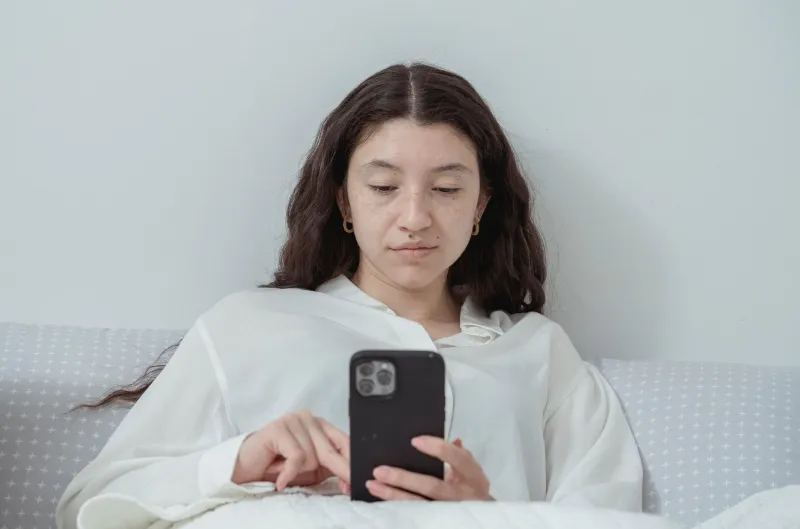
Sarah, 28, knows everything about Emma Chamberlain. She knows Emma's coffee order, her skincare anxieties, her complicated feelings about fame. She's watched every video, listened to every podcast episode, and follows Emma's finsta. "She just gets it," Sarah told us. "Like, I feel like if we met, we'd actually be friends."
Sarah has never met Emma Chamberlain. She almost certainly never will. And yet this relationship — entirely one-sided by structural design — is one of the most emotionally significant ones in her life.
This is parasocial peak. And Sarah is far from alone.
The Friendship Drought Nobody Wants to Talk About
America has a friendship problem, and it's been building for decades. A 2021 Survey Center on American Life report found that 15% of American men and 10% of American women reported having no close friends — numbers that have roughly tripled since 1990. The pandemic didn't create this crisis, but it accelerated it dramatically, stripping away the incidental social contact — the office small talk, the gym buddy, the regular at your coffee shop — that quietly sustained a lot of people's sense of connection.
Into that void stepped the content creator.
The math makes a certain kind of sense. A good creator posts consistently, shares personal stories, maintains a recognizable personality, and responds (at least occasionally) to comments. They're available at 2 a.m. when you can't sleep. They don't cancel plans. They don't make you feel judged for your interests. For someone navigating loneliness, social anxiety, or a life transition, that kind of steady, low-stakes presence can feel genuinely nourishing.
It's Not New — But It's Never Been This Intense
Parasocial relationships aren't a social media invention. The term was coined by sociologists Donald Horton and Richard Wohl back in 1956 to describe the one-sided emotional bonds audiences form with television personalities. People felt like they knew Johnny Carson. They grieved when soap opera characters died. The phenomenon is as old as mass media.
What's different now is the intimacy architecture of modern platforms. Old-school TV kept a clear wall between performer and audience. Today's creator economy has systematically demolished that wall. Creators share their therapy sessions, their breakups, their 3 a.m. crying spirals. They respond to DMs. They do livestreams where they talk to fans by name. They build Discord servers where their communities live between uploads.
The result is a relationship that mimics friendship with extraordinary fidelity — the vulnerability, the consistency, the shared references, the inside jokes — without technically being one.
The Creator's Side of the Equation
It's worth pausing on what this dynamic costs the people at the center of it. Many creators have spoken openly about the psychological weight of being someone's primary source of emotional support at scale.
Hank Green, one half of the vlogbrothers duo and a longtime observer of internet culture, has described the parasocial relationship as "an asymmetrical intimacy that the creator has to manage carefully or it will consume them." Creators who lean too hard into the friendship framing often find themselves trapped by audience expectations — unable to set limits, take breaks, or change without triggering genuine grief responses from fans who experience it as abandonment.
The flip side is that some creators deliberately cultivate parasocial intensity as a business model. The "girlfriend experience" content genre — where creators produce videos explicitly designed to simulate companionship — is a multi-million dollar category on YouTube and Patreon. It's not predatory in any simple sense, but it is a commodification of the intimacy gap, and it raises real questions about what we're building when we monetize loneliness.
When Fictional Characters Fill the Gap
It's not just real creators, either. The parasocial trend extends into fiction with a ferocity that's hard to overstate. The intensity of fan communities around characters from shows like Succession, Euphoria, or The Bear goes well beyond casual appreciation — fans develop detailed theories, write fan fiction that runs to novel length, and process the show's events with the emotional weight of real-life relationships.
Psychologists suggest this makes a certain cognitive sense. The brain processes social information — reading emotions, predicting behavior, building mental models of people — the same way whether the person is real or fictional. Engaging deeply with a complex character genuinely exercises your social cognition. The problem arises when fictional relationships start substituting for real ones rather than supplementing them.
Is This Actually Bad?
Here's where it gets genuinely complicated: not all parasocial relationships are harmful. For people in isolated circumstances — rural communities, chronic illness, social anxiety disorders — parasocial bonds can provide real psychological sustenance. Research from the University of Buffalo found that people who engaged in parasocial relationships showed similar boosts in mood and sense of belonging to those who engaged in real social interactions, at least in the short term.
The distinction that matters is substitution versus supplementation. Using a creator's content to feel less alone while you're actively building real-world connections is probably fine. Using it as a reason to avoid the messier, riskier work of actual friendship is where the research starts to look concerning.
Long-term parasocial reliance is associated with increased social anxiety, reduced tolerance for the imperfection of real relationships, and what some researchers are calling "social atrophy" — a gradual erosion of the skills and stamina required for reciprocal friendship.
What We're Really Hungry For
Maybe the most honest way to look at parasocial peak is as a symptom rather than a cause. The demand for creator intimacy reflects a genuine cultural hunger — for consistency, for being known, for low-stakes connection in a world that increasingly delivers high-stakes everything.
Creators didn't manufacture that hunger. They just got very good at feeding it.
The question worth sitting with isn't whether parasocial relationships are real — emotionally, they clearly are. It's whether we're using them as a bridge back to human connection or as a permanent alternative to it. Sarah knows everything about Emma Chamberlain. But does Emma's latest episode know anything about Sarah's actual week?
That asymmetry is the whole thing. And until we reckon with it honestly — as individuals and as a culture — the parasocial best friend is going to keep showing up in our feeds, three times a day, right on schedule.