Bold Is the New Black: Why Americans Are Dressing Like Their Feelings Finally Got a Vote
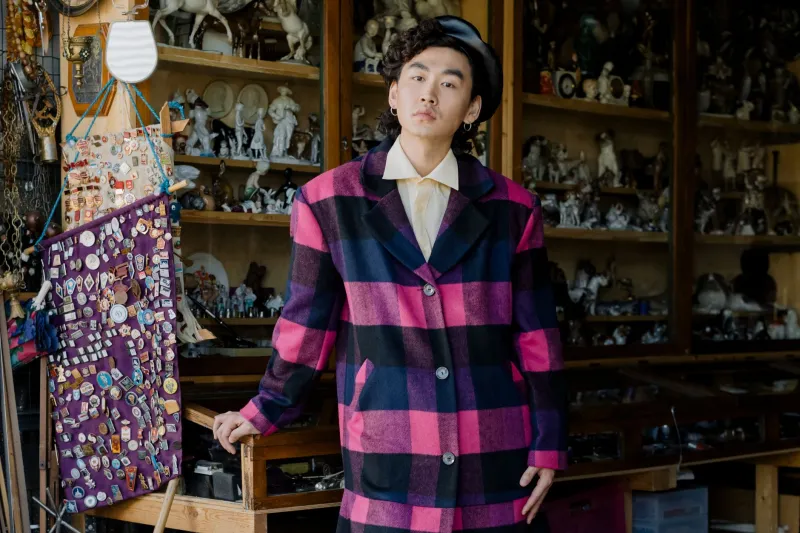
Somewhere between a global pandemic, a mental health crisis, and approximately four thousand Pinterest boards dedicated to "quiet luxury," Americans snapped. Not in a bad way — more like a collective, glittery, sequin-covered snap. The closets are louder now. The color palettes are wilder. And the idea that a capsule wardrobe of beige linen could carry you through the emotional gauntlet of modern life? Officially deceased.
Welcome to the era of dopamine dressing — where your outfit isn't just an outfit. It's a mood board, a protest sign, and a therapy session all rolled into one very maximalist look.
From Minimalism to Maximum Feeling
For the better part of a decade, American style aspirations were essentially synonymous with restraint. Clean lines, neutral tones, the kind of wardrobe that whispered "I have my life together" even when you absolutely did not. Minimalism wasn't just an aesthetic — it was a whole identity, a signal of sophistication and intentionality.
Then something shifted.
"People are exhausted from performing calm," says Maya Osei, a Brooklyn-based stylist who works with clients ranging from corporate executives to college students. "There's this collective fatigue around looking put-together in a muted way when the world genuinely does not feel muted. Color and pattern became a kind of emotional honesty."
The data backs this up. According to retail trend reports, sales of brightly colored clothing and bold-printed pieces surged in 2022 and have continued climbing. Searches for "maximalist outfits" on Pinterest shot up by over 300% in a two-year window. And on TikTok, the hashtag #dopaminedressing has accumulated billions of views, with creators mixing clashing prints, stacking jewelry, and layering textures in ways that would have been called chaotic five years ago but now just read as fluent.
The Psychology of Wearing Your Mood Out Loud
Dr. Renata Flores, a clinical psychologist based in Chicago who studies the intersection of identity and consumer behavior, has a theory about why this is happening right now specifically.
"We've been living in a prolonged state of ambient anxiety," she explains. "And when you're anxious, you crave agency — the feeling that you can control something. Getting dressed is one of the most immediate, accessible ways to assert that control. Choosing something joyful, something that makes you feel a certain way before you even walk out the door, is a micro act of self-determination."
This tracks with what psychologists call "enclothed cognition" — the documented phenomenon where the clothes you wear actually influence your emotional state and cognitive performance. It's not just that you feel more confident in a great outfit. The specific emotional associations you attach to colors and styles can physically shift your mood. Wearing yellow might not cure seasonal depression, but there's real science behind the idea that it doesn't hurt.
For Gen Z in particular, this isn't a trend — it's a philosophy. "I don't dress for other people's comfort anymore," says Jade Tran, a 23-year-old fashion creator based in Houston with nearly 400,000 followers. "My wardrobe is like... the most honest version of my diary. Some days I'm wearing all black because I'm grieving something. Other days I'm in head-to-toe orange because I actually woke up feeling okay and I want to celebrate that."
Algorithm Aesthetic or Actual Liberation?
Here's where it gets complicated, because it always does.
Maximalism is everywhere right now — on TikTok, on Instagram, in every fast fashion retailer's new collection. And when a "liberation aesthetic" gets commodified at scale, it's fair to ask: is this genuine self-expression, or is it just the algorithm deciding what emotional performance looks like this season?
"The tricky thing," admits Osei, "is that even authentic movements get absorbed. The dopamine dressing conversation started in really organic places — people just wearing what made them happy. But now brands are selling 'dopamine dressing kits.' There are influencers whose entire brand is maximalism as a personality, and it starts to feel very... manufactured."
Dr. Flores sees both sides. "It can absolutely be both things at once. Someone can be genuinely expressing joy through color while also being influenced by what they're seeing algorithmically. Human behavior is rarely one clean motivation. The question is whether the joy is real when you put the thing on — and for most people, it seems like it is."
There's also a global dimension to this shift that's easy to miss. American maximalism isn't happening in a vacuum — it's being fed by aesthetics from Afrobeats fashion culture in Nigeria, Bollywood-adjacent styling from South Asian creators, the hyper-expressive K-pop visual universe, and Brazilian carnival-adjacent color theory. The TikTok algorithm, whatever its many flaws, has genuinely democratized aesthetic influence, and American fashion is absorbing signals from everywhere.
What It Actually Means to Dress With Joy
The most interesting thing about the dopamine dressing phenomenon isn't the clothes themselves — it's what they reveal about the cultural moment.
We are living through an era of profound collective anxiety: climate dread, economic instability, political exhaustion, the particular psychic weight of being online all the time. And in that context, choosing to wear a dress covered in giant sunflowers, or layering neon green over cobalt blue, or stacking fifteen rings on your fingers before a Tuesday morning commute — that's not frivolous. That's actually kind of radical.
"Joy is a political act right now," Jade Tran says, and she means it without irony. "Like, choosing to be visibly happy, visibly expressive, visibly yourself — that takes courage when everything around you is telling you to be scared or small or beige."
Whether the trend lasts in its current form is almost beside the point. Aesthetics cycle. What's loud becomes quiet, what's quiet gets loud again. But the underlying impulse — using your body, your clothes, your visible self as a site of genuine emotional expression — that's not going anywhere.
Your outfit was always telling a story. Americans are just finally letting it say something true.