Scroll High: The Secret Science Behind Why Your Streaming App Feels Better Than the Show Itself
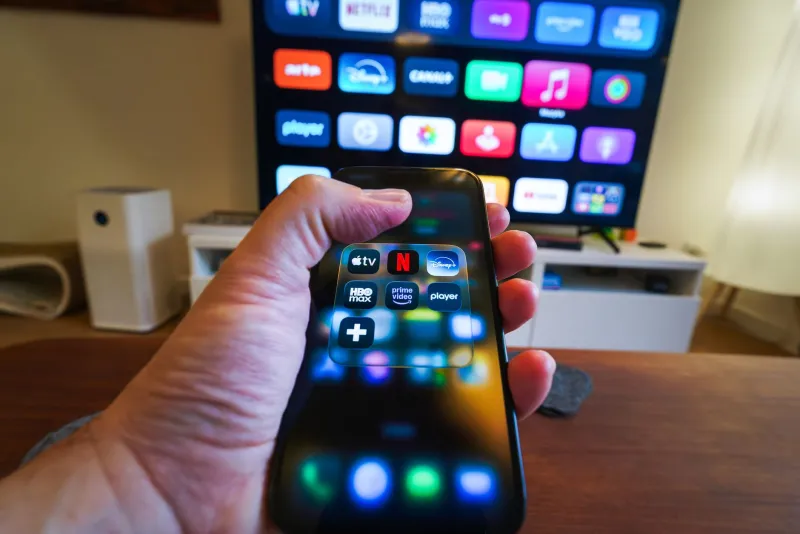
You've done it. Everyone has. You open a streaming app with every intention of watching something, spend forty-five minutes scrolling through thumbnails, and then close the app without pressing play on a single thing. And somehow, weirdly, that felt okay. Almost satisfying, even.
That's not an accident. That's engineering.
Streaming platforms have quietly become some of the most sophisticated dopamine delivery systems ever built — and the actual content? It's almost secondary to the experience of hunting for it. Welcome to the Dopamine Menu, where the browsing is the product and your attention is the currency.
Your Brain on Thumbnails
Let's get into the neuroscience for a second, because it's genuinely wild. Dopamine isn't just the "pleasure chemical" — it's more accurately the anticipation chemical. Your brain releases it not when you get the reward, but when you're expecting it. The scroll is the slot machine lever. Every thumbnail you swipe past is a micro-promise: this one might be perfect.
Streaming apps are built around this mechanic with surgical precision. The infinite scroll format means there's no natural stopping point, no moment where your brain gets to exhale and say "okay, I've seen the options." Netflix, Hulu, Disney+ — they all use autoplay previews that trigger just as your eyes land on a title, feeding your visual cortex a quick hit before you've made any conscious decision. It's anticipation stacked on anticipation.
Dr. Anna Lembke, a Stanford psychiatrist and author of Dopamine Nation, has described how repeated, low-effort stimulation trains the brain to expect novelty constantly. Streaming interfaces deliver novelty in small, frictionless bursts — a new thumbnail, a new genre row, a new "because you watched" suggestion — keeping your reward system perpetually activated without ever fully satisfying it.
Color Theory Isn't Just for Art Class
Here's where it gets even more intentional. The visual design of streaming platforms isn't random. It's a carefully calibrated psychological environment.
Netflix's signature red isn't just branding — red is one of the most attention-grabbing colors in the human visual spectrum, associated with urgency and excitement. The dark backgrounds used across most major platforms aren't just sleek; they create high contrast that makes colorful thumbnails pop, drawing your eye faster and holding it longer. Hulu's green sits in a sweet spot of approachability and energy. Even the gradient overlays on thumbnails are chosen to maximize legibility while maintaining emotional tone.
Then there are the micro-interactions — those tiny animations when you hover over a title, the satisfying click of adding something to your watchlist, the little notification dot that tells you something new dropped. Each of these is a micro-reward, a tiny pulse of feedback that tells your nervous system: you did a thing, and the thing worked. UX designers call this "interactive delight." Neuroscientists would call it operant conditioning. Both are right.
Personalization as Psychological Trap
The recommendation algorithm is where the dopamine architecture gets truly personal. These systems don't just track what you watch — they track how long you hover, what you skip, what time of day you browse, even how fast you scroll past certain genres. The result is a content environment that feels almost telepathic.
And that feeling of being understood by an app? That's its own dopamine hit. Humans are social creatures hardwired to respond to recognition. When Spotify drops a Discover Weekly playlist that somehow nails your exact mood, or when TikTok's For You Page serves up a niche interest you've never explicitly searched for, the brain interprets that as a form of social connection — the digital equivalent of a friend who really gets you.
The problem is that hyper-personalization creates a feedback loop that narrows your taste over time even as it seems to expand it. You're not being shown the breadth of what's available. You're being shown a mirror of yourself, increasingly refined, increasingly comfortable, and increasingly disconnected from the kind of unexpected discovery that genuine cultural engagement requires.
When the Show Itself Becomes the Letdown
Here's the uncomfortable truth that the platforms would rather you not sit with: the browsing experience has become neurologically superior to the content experience for a growing number of users.
Watching a show requires sustained attention, emotional investment, and tolerance for pacing that doesn't always match your mood. Scrolling requires none of that. It's all promise, no commitment. And after years of training your brain with frictionless, high-novelty browsing, sitting through a slow-burn first episode starts to feel genuinely uncomfortable.
This is showing up in data. A 2023 report from Deloitte found that 57% of American streaming subscribers reported feeling overwhelmed by content choices, and a significant portion admitted to spending more time choosing than actually watching. The paradox of choice isn't new — psychologist Barry Schwartz wrote about it decades ago — but streaming platforms have weaponized it in a way that keeps users engaged with the interface even when they're not engaging with the content.
What This Means for Your Brain Long-Term
The long game here is worth paying attention to. Neuroplasticity means your brain physically rewires itself based on repeated behaviors. If you spend more time in the high-novelty, low-commitment scroll state than in the sustained-attention state required for watching, reading, or listening to long-form content, your brain starts to optimize for the former.
This shows up as a reduced tolerance for slow pacing, difficulty finishing things you start, and a creeping sense that nothing — no movie, no show, no album — is quite as satisfying as it should be. The technical term researchers use is "hedonic adaptation." The casual term is feeling perpetually underwhelmed.
None of this means streaming platforms are evil or that you need to delete all your apps tomorrow. But it does mean that understanding the design philosophy behind them gives you a fighting chance at using them on your own terms.
Taking Back the Remote
So what do you actually do with this information? A few things help. Setting an intentional choice — deciding what you're going to watch before opening the app — short-circuits the scroll loop. Keeping a running watchlist you curate when you're not in the mood to watch removes the decision fatigue from the moment. And occasionally choosing something outside your algorithmic bubble, even if it's uncomfortable, keeps your taste genuinely yours rather than a product of pattern-matching software.
The platforms aren't going to redesign themselves to be less addictive. That's not their incentive. But knowing that the scroll is the product, not the perk, is the first step toward watching on your own terms — and actually enjoying what you press play on.